 Philanthropy
Mastering Wealth Transfer Across Generations
The complexity of generational wealth transfer As trillions of dollars are transitioning from older generations to their heirs, affluent families face sign...
February 7, 2025

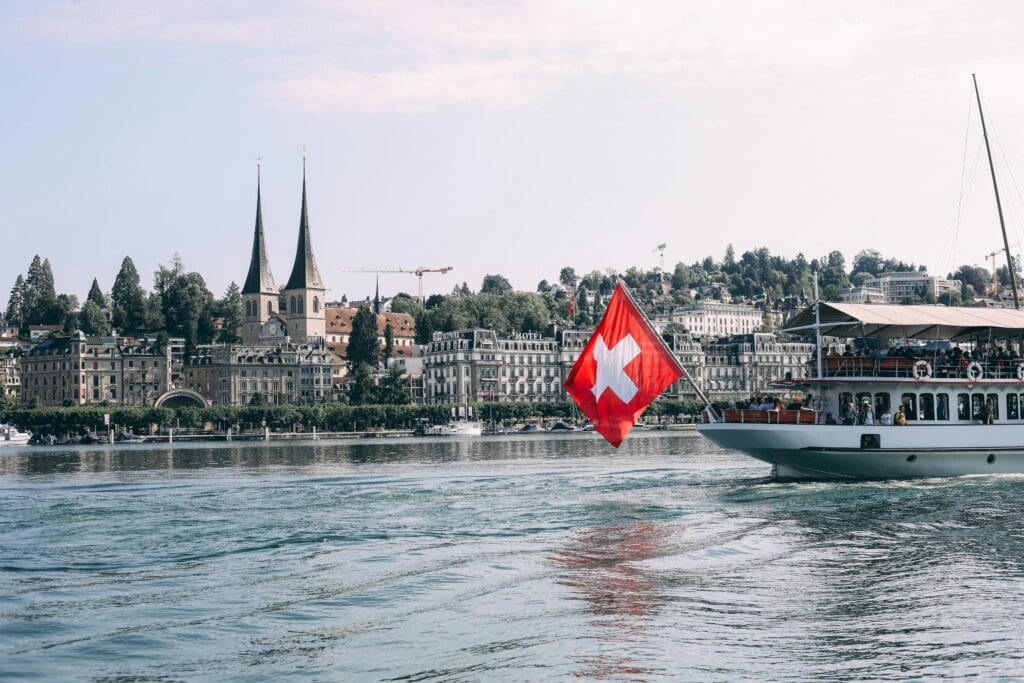
Can Swiss wealth management preserve its traditions while adapting to a new generation of clients?
Wealth management is changing because the people behind the wealth are changing. Today’s private clients include established families alongside entrepreneurs, technology founders, executives, women controlling substantial family wealth, internationally mobile individuals, and younger generations inheriting assets and responsibilities.
Yet from a Swiss perspective, multi-generational wealth management itself is nothing new.
Switzerland has a long history of helping private families manage, preserve, and transfer wealth quietly from one generation to the next. Discretion, continuity, disciplined investing, personal relationships, and long-term thinking have been central to the Swiss wealth-management tradition for generations.
What is changing is how those principles need to be delivered.
The next generation wants to be heard and involved. They expect modern technology, international investment opportunities, transparency, and advice reflecting the way they actually live.
The opportunity is therefore not to replace Swiss tradition.
It is to adapt a proven tradition to a changing generation.
The idea that family wealth should survive its creators is deeply embedded in traditional Swiss wealth management.
There is an old international saying that family wealth can disappear within three generations: one generation creates it, the next preserves it, and the third spends it. The expression varies between cultures, but the underlying problem is familiar.
Successful multi-generational planning attempts to interrupt that cycle.
That requires considerably more than investment performance. Families need continuity, appropriate risk management, liquidity planning, succession and estate planning, financial education, governance, and a gradual transfer of both assets and responsibility.
Swiss private banking and independent wealth management have historically taken a long view. Wealth is not necessarily managed only for the person sitting across the table today.
It may also be managed with the children, grandchildren, and generations that follow in mind.
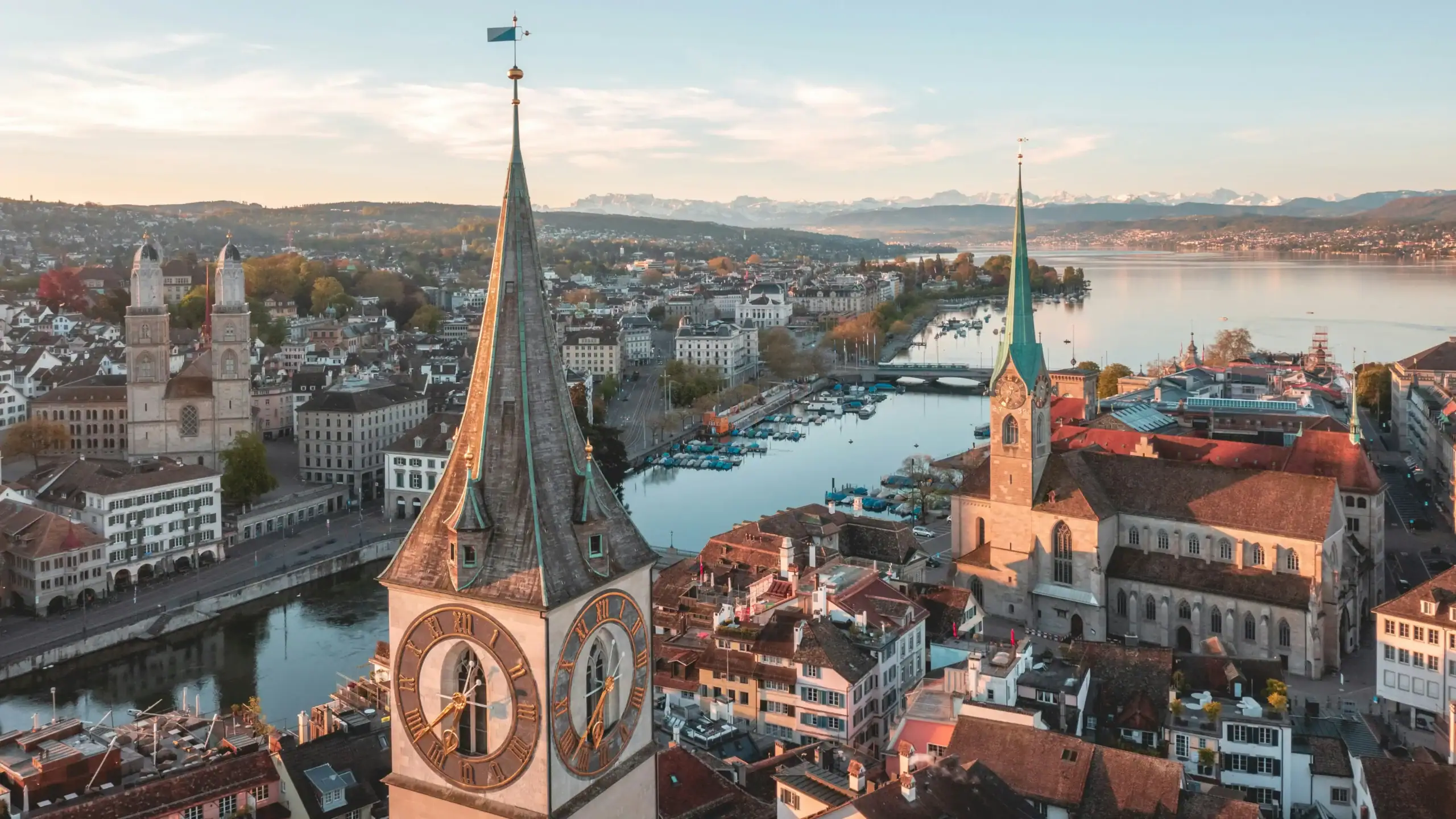
Switzerland’s geography has helped shape its financial outlook.
Located in the heart of Europe, with several national languages and neighboring Germany, France, Italy, Austria, and Liechtenstein, Switzerland has always had to look beyond its borders. Its economy, companies, currency relationships, and financial sector are inherently international.
That perspective naturally extends to investing.
For generations, Swiss wealth management has looked beyond the domestic market to international equities, bonds, currencies, businesses, real estate, and other opportunities. For a relatively small country with a globally connected economy, international diversification has historically been a necessity rather than a fashionable investment concept.
Today that experience has particular relevance for internationally mobile families. Their wealth may span North America, Europe, Asia, and the Middle East, while individual family members live in entirely different countries.
International wealth management increasingly needs to reflect that reality.
There is no single answer, and that is precisely the point.
Two clients with USD 10 M to invest may have completely different financial lives. One may have inherited family wealth. Another may have just sold a technology company. One may be focused on preservation, while another is still building businesses and accepting greater investment risk.
Global mobility adds another dimension. A client may have been educated in the United States, built a company in Asia, live in Switzerland, own property elsewhere in Europe, and have children establishing their lives on different continents.
We therefore need to understand not only how much wealth someone has, but where it came from, where it is held, where family members live, which jurisdictions are involved, and what each generation wants it to accomplish.
Knowing the assets matters. Knowing the family behind those assets matters even more.
Intergenerational wealth transfer is not simply about assets moving from one account holder to another.
It is about transferring responsibility.
This is another area where the traditional Swiss model remains relevant. The objective is not merely to preserve a portfolio until inheritance occurs. Where appropriate, younger generations can gradually become part of the conversation, understand how family wealth is structured, develop financial knowledge, and establish their own relationship with the family’s advisers.
They may not make the same decisions as their parents. Nor should they necessarily be expected to.
Multi-generational wealth management is about continuity, not conformity.
The experience and discipline accumulated by one generation can provide a foundation for the next without restricting its ability to respond to different careers, families, countries of residence, investment preferences, and priorities.
That is how wealth can evolve without losing sight of what previous generations worked to create.
Increasingly, yes.
International families tend to accumulate financial relationships as they move around the world: investment accounts in the United States, custodian banks in Switzerland, property in Europe, businesses elsewhere, pension assets, trusts, multiple currencies, and professional advisers in several countries.
Over time, the result can become fragmented.
Modern global wealth planning creates an opportunity for coordinated consolidation across jurisdictions.
That does not necessarily mean moving everything to Switzerland or placing every asset with one bank. Quite the opposite. Appropriate jurisdictional and custodian diversification may remain valuable.
The objective is to consolidate the oversight, reporting, investment strategy, and planning, while allowing assets to remain appropriately diversified.
For multi-generational families, this can provide something increasingly important: a clearer view of the family’s total wealth even when that wealth—and the family itself—spans several countries.
Today’s wealthy families are comfortable having several specialist relationships.
There may be multiple custodian banks, an independent wealth manager, private-market specialists, tax advisers, estate-planning attorneys, trustees, lenders, insurance specialists, and family-governance advisers.
The independent wealth manager can increasingly help connect those pieces.
Open architecture is particularly valuable because the conversation does not need to begin with a predetermined product range. It can begin with the family.
Which investments are appropriate? Which currencies matter? Where should assets be custodied? What liquidity is required? How should different generations invest? Can reporting be consolidated? How should existing relationships across countries work together?
For international families, consolidation does not have to mean concentration.
It can mean one coordinated wealth strategy while maintaining appropriate diversification across investments, currencies, custodians, and jurisdictions.
It may sound contradictory, but we believe it can.
Technology and artificial intelligence can improve reporting, consolidate information, identify portfolio developments, and reduce administrative work. This becomes particularly valuable when family wealth is spread across several banks, asset classes, currencies, and jurisdictions.
What technology should not do is replace personal relationships.
Younger clients expect digital access, timely information, and transparency. Traditional private banking clients may place greater emphasis on personal meetings and established relationships. Modern wealth management can provide both.
Technology should ultimately give advisers more time to do what matters: listen, understand family dynamics, apply judgment, coordinate specialists, and remain available when important decisions arise.
In that respect, technology can support rather than undermine traditional Swiss wealth management.
The tools change.
The importance of knowing the family does not.
Perhaps the greatest advantage of tradition is perspective.
Swiss wealth management has experienced generations of economic cycles, wars, inflation, currency changes, political upheaval, technological transformation, and changing family circumstances.
The objective has never been to predict every development correctly.

It has been to help families think beyond the immediate moment.
That remains relevant today. Families are more international, wealth can be created faster, portfolios are more complex, and younger generations have different expectations. But preserving wealth across generations still requires patience, diversification, discipline, continuity, and planning.
Our responsibility as an independent Swiss wealth manager is therefore to preserve what continues to work while remaining willing to adapt what does not.
Tradition should provide experience and perspective.
It should never become an excuse for standing still.
No. While the scale of today’s intergenerational wealth transfer is attracting considerable attention, managing family wealth across generations has long been part of the Swiss private banking and wealth-management tradition. What is changing is the international mobility, complexity, technology, and expectations surrounding that wealth.
Not necessarily. Younger clients may still value discretion, investment discipline, personal relationships, and long-term thinking. What often changes is how they access information, participate in decisions, communicate with advisers, and integrate wealth into increasingly international lives.
Yes. Consolidation can mean coordination rather than concentration. Assets can remain diversified across banks, currencies, investments, and jurisdictions while benefiting from consolidated reporting and a coordinated family wealth strategy.
There is no formula or guarantee. Investment discipline is only one part of the process. Financial education, family communication, governance, succession and estate planning, appropriate diversification, and gradually preparing younger family members to take on financial responsibility.
Much of today’s wealth-management industry is discussing the challenge of managing an unprecedented transfer of wealth between generations.
In Switzerland, the underlying question is familiar.
How do you help wealth survive the generation that created it?
For generations, Swiss-style wealth management has approached that question through discretion, continuity, international diversification, personal relationships, and a long-term perspective.
Switzerland’s location at the heart of Europe has also encouraged an outward-looking approach. International investing, multiple currencies, cross-border families, and global financial relationships are not new additions to the Swiss wealth-management model. They are part of its history.
What is new is the degree of global mobility.
Families and their wealth increasingly span continents and jurisdictions. That creates an opportunity to combine traditional multi-generational wealth management with coordinated global planning and consolidated oversight.
Respect the wealth that previous generations created. Prepare the next generation to take responsibility for it. And adapt the strategy as the family and the world around it change.
That is how tradition remains relevant.
Our approach draws on Switzerland’s long tradition of multi-generational wealth management while incorporating modern, open-architecture investment management and global wealth planning.
We work with established private banking clients, entrepreneurs, internationally mobile families, and younger generations assuming responsibility for family wealth. Our services include discretionary and advisory portfolio management, international investment and currency diversification, Swiss and international custodian banking relationships, private-market access, liquidity planning, consolidated investment reporting, family office services, and broader cross-border wealth planning as well as citizenship and residence planning guidance.
Our objective is not simply to manage wealth today. It is to help families think about what that wealth needs to accomplish across generations.
Author

We are your partner to find the best private bank.
No matter the problem, Alpen will handcraft a solution for you. We know that there is no one-size-fits-all when striving for financial success. Our approach involves working with our clients to make a unique plan to meet their needs.
Contact us to enhance your financial plan today.
Philanthropy
 Philanthropy
 Philanthropy

Pierre Gabris
Your contact for wealth management
Website: Agenza GmbH