 FX Advisory
Investing in Foreign Currencies
Protect yourself by buying healthy currencies. Even if an investor is confident in their portfolio, or the strength of the market, there will always be a l...
November 18, 2022

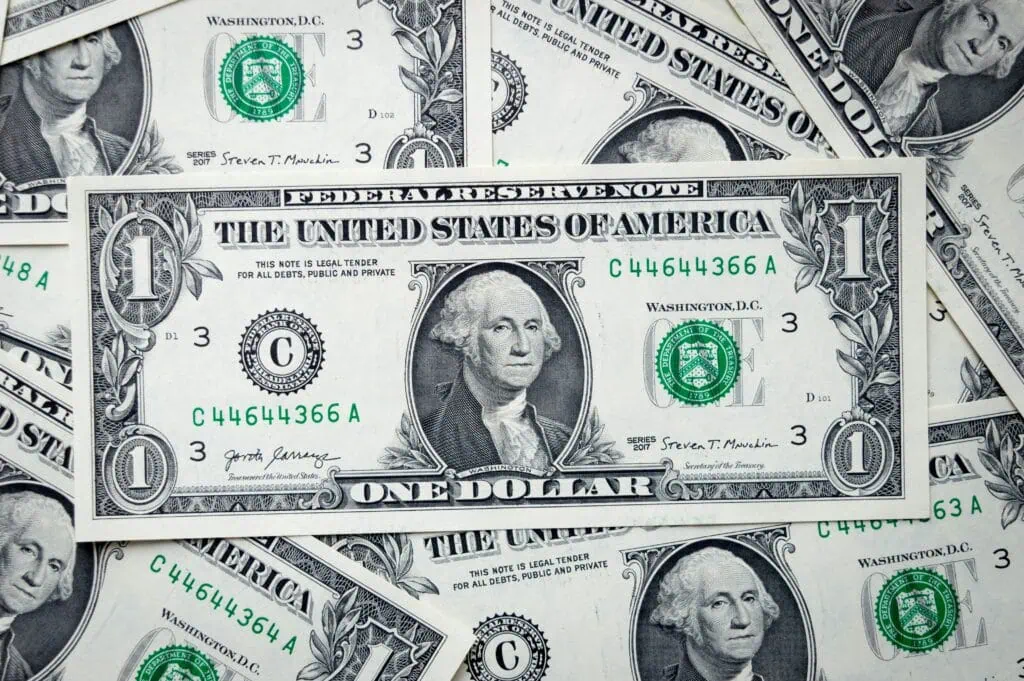
Could renewed pressure on US Treasuries make currency diversification more relevant?
The latest moves in US bond and currency markets deserve attention. Not because they prove the dollar is entering a lasting decline, but because they highlight how quickly confidence can move between interest rates, government debt, and currencies.
The US Treasury’s decision to expand buybacks of longer-dated government bonds initially pushed yields lower. The relief proved short-lived. Investors questioned whether the intervention addressed the underlying fiscal concerns, and the dollar came under pressure. By August 21, the dollar index was near a three-month low and heading for a weekly decline of more than 0.8%.
The Swiss franc (CHF) reacted sharply. Following the Treasury announcement on August 19, it appreciated about 1.65% against the dollar, taking USD/CHF briefly below 0.80.
From our perspective as a Swiss-based independent wealth manager, the more important issue is not whether the Swiss franc will rise further next week. It is what these developments tell us about currency concentration, diversification, and the role the Swiss franc can play within international wealth.
The immediate catalyst came from the US Treasury.
The department announced that it would double buybacks of longer-dated Treasury securities over the coming quarter in an effort to address pressure in the bond market. Treasury Secretary Scott Bessent subsequently indicated that repurchases could be increased further.
Markets initially welcomed the intervention. Longer-term Treasury yields fell.
Then the questions started.
Investors began asking whether managing longer-term yields through larger Treasury buybacks could shift pressure elsewhere, particularly toward the dollar. Concerns about federal debt, persistent fiscal deficits, policy uncertainty, and the credibility of US institutions added to the unease.
That does not amount to a loss of faith in the dollar. But it does demonstrate that even the world’s dominant reserve currency is influenced by fiscal and institutional confidence.
Quite a lot.
The depth and liquidity of the US Treasury market are among the foundations of the US dollar’s international role. Global investors hold Treasuries for income, liquidity, collateral, and perceived security.
If investors become less comfortable with long-dated US government debt, or believe policy intervention is suppressing the return they receive for holding it, the attractiveness of dollar-denominated assets can change.
That is why the latest bond-market intervention became a currency story so quickly.
One strategist cited by Reuters suggested the measures could encourage additional dollar hedging and diversification. Others cautioned that attempts to restrain long-term yields could leave the currency absorbing some of the adjustment.
This remains a developing market debate rather than a settled conclusion.
The Swiss franc’s response illustrates one of its longstanding characteristics.

When investors become uncomfortable with developments elsewhere, Switzerland can attract capital because of its political stability, institutional framework, current-account characteristics, and history of monetary and fiscal discipline.
Following the US Treasury announcement, USD/CHF fell from above 0.81 to around 0.80, while the Swiss franc also strengthened against the Euro. Swiss market commentary attributed much of the move to US dollar weakness rather than to a new development within Switzerland itself.
That distinction matters.
A stronger Swiss franc does not always mean something has changed fundamentally in Switzerland. Sometimes it reflects what investors are reassessing elsewhere.
This is one reason the Swiss franc has historically occupied an unusual place in international portfolios.
The Swiss franc retains many of the characteristics associated with a defensive currency, but “safe haven” should never be interpreted as meaning that it only moves in one direction.
In fact, the story immediately preceding the latest US Treasury announcement was almost the opposite.
The Swiss franc had weakened from earlier 2026 highs, and investors had increasingly considered it as a funding currency for carry trades because Swiss interest rates were at 0%. Reuters reported last week that the franc was around 4% below its March peak against the Euro and 7% below its January highs against the dollar before the latest market move.
Then US policy news arrived, and the franc strengthened sharply.
That is a useful reminder that currency markets respond to relative conditions. Swiss monetary policy, US fiscal policy, interest-rate differentials, geopolitical events, and global risk appetite can all influence the exchange rate.
Yes. Switzerland has a complicated relationship with a strong currency.
For international investors, franc appreciation can increase the value of CHF-denominated assets when measured in another currency.
For Swiss exporters, however, an excessively strong franc can make goods and services more expensive abroad and reduce the Swiss-franc value of overseas revenues.
It can also add to disinflationary pressure.
That creates a balancing act for the Swiss National Bank. Switzerland’s stability can attract capital precisely when the SNB might prefer to avoid excessive currency appreciation.
This means investors should not assume that safe-haven demand automatically translates into an uninterrupted rise in the franc. Monetary policy remains an important counterweight.
For an American investor, the first question should not be:
“Should I buy Swiss francs because the dollar is falling?“
That would turn strategic diversification into a short-term currency trade.
A more useful question is whether a family’s wealth has become overly dependent on the US dollar in the first place.

Many successful Americans have considerably more dollar exposure than their portfolio statement suggests. Their income may be in dollars. Their business, home, retirement accounts, bank deposits, bonds, and investment portfolio may all be US-based.
Even globally active American companies held in a portfolio do not necessarily remove that broader domestic concentration.
For some investors, holding part of their wealth in other currencies and jurisdictions can therefore be evaluated as a structural diversification decision rather than a forecast about the next move in USD/CHF.
No.
This distinction is particularly important.
The US dollar remains the dominant global reserve currency and sits at the center of international finance. The American economy and its capital markets retain substantial structural strengths. Even amid the latest concerns, some market analysts continue to see strong US productivity and corporate earnings as important support for the currency.
International diversification does not require a negative view of America.
It means recognizing that wealth can be concentrated not only by company or asset class, but also by currency, custody, country, and jurisdiction.
A US investor can maintain substantial exposure to American markets while also considering assets denominated in Swiss francs, Euros, or other currencies where appropriate.
The purpose is balance, not a wholesale shift from one currency to another.
Switzerland is a relatively small economy, yet the Swiss franc has an international significance that exceeds the country’s economic size.
That reflects a combination of factors developed over many decades: institutional stability, an independent central bank, established capital markets, a globally oriented economy, and Switzerland’s role as an international wealth-management center.
For investors, the Swiss franc can therefore serve several purposes.
It can be a currency in which investments are denominated, a currency in which liquidity is maintained, or the currency associated with a broader Swiss banking and custody relationship.
Those are different decisions.
Simply holding francs is not the same as internationally diversifying a portfolio, just as buying one Swiss security does not create a global investment strategy.
Currency diversification is only one layer of international diversification.
From Switzerland, we tend to look at the broader structure: where assets are invested, in which currencies they are denominated, where they are custodied, which banks hold them, and under which jurisdictions those relationships operate.

That can be particularly relevant for families whose wealth is overwhelmingly connected to one country.
A Swiss banking and investment-management relationship may complement existing domestic relationships rather than replace them. The portfolio itself can remain globally invested, including substantial US exposure where appropriate, while introducing additional currencies, international markets, and custody relationships.
For us, that is a more meaningful definition of international diversification than simply reacting to today’s exchange rate.
Absolutely.
Currencies rarely move in straight lines.
Changes in Federal Reserve policy, stronger US economic data, declining fiscal concerns, renewed demand for Treasuries, Swiss monetary policy, or changing geopolitical conditions could all alter the relative attractiveness of the dollar and franc.
The Swiss franc itself had been weakening only days before the latest US Treasury announcement.
That is precisely why long-term wealth planning should not depend on accurately predicting short-term currency movements.
A diversified currency framework is generally better understood in relation to the client’s assets, liabilities, future spending, liquidity requirements, investment objectives, and risk tolerance.
The move primarily reflected broad dollar weakness after investors questioned the Treasury’s expanded long-bond buyback program. On August 19, the franc appreciated sharply against the dollar, with USD/CHF moving to around 0.80.
No. USD/CHF reflects developments affecting both currencies. US fiscal and monetary policy, Swiss monetary policy, interest-rate differentials, inflation, economic conditions, and global risk sentiment can all influence the exchange rate.
That depends on the investor’s objectives, existing currency exposure, liabilities, time horizon, risk tolerance, and broader portfolio. A short-term currency view should be distinguished from a strategic decision to diversify wealth internationally.
No. Currency exposure, investment exposure, banking relationships, and custody are separate considerations. A globally diversified portfolio managed from Switzerland can contain assets from many countries and in several currencies.
The most interesting lesson from last week’s markets is not that the US dollar fell or that the Swiss franc rose.
Those movements can reverse.
What matters more is why markets reacted.
Investors were not responding solely to another interest-rate announcement. They were considering the relationship between government debt, Treasury-market intervention, fiscal credibility, bond yields, and the value of the currency itself. The dollar’s weekly decline and the franc’s sudden appreciation were expressions of that reassessment.
For internationally minded investors, this is a reminder that currency deserves a place in the diversification discussion.
Not because the dollar is about to lose its global role. Not because the Swiss franc will necessarily appreciate. And not because today’s market movement demands an immediate portfolio response.
Rather, significant wealth can become highly concentrated in one currency almost by default.
From our perspective as a Swiss-based independent wealth manager, the more durable question is therefore:
If your wealth is diversified across investments, is it also sufficiently diversified across currencies, markets, custody relationships, and jurisdictions?
That is a question worth considering whether USD/CHF is at 0.80, 0.90, or somewhere else entirely.
The firm provides globally diversified portfolio management, Swiss banking relationships, multi-currency investment strategies, liquidity planning, family office services, and cross-border wealth planning. In addition to traditional wealth management services, Alpen also provides guidance on citizenship and residence planning and relocation to Switzerland and other preferred destinations.
For American clients in the United States and abroad, Alpen Partners International is registered with the US Securities and Exchange Commission as an Investment Adviser. Investment and currency allocations depend on each client’s objectives, financial circumstances, risk tolerance, liquidity requirements, and applicable regulatory considerations.
Source: https://www.globalbankingandfinance.com/dollar-wobbles-investors-balk-us-treasurys-rescue-efforts
Author

We are your partner to find the best private bank.
No matter the problem, Alpen will handcraft a solution for you. We know that there is no one-size-fits-all when striving for financial success. Our approach involves working with our clients to make a unique plan to meet their needs.
Contact us to enhance your financial plan today.
FX Advisory
 FX Advisory
 FX Advisory

Pierre Gabris
Your contact for wealth management
Website: Agenza GmbH