What Do the New Swiss Banknotes for 2030 Reveal About Switzerland’s Financial Future?
Published: May 8, 2026
Last updated: May 28, 2026
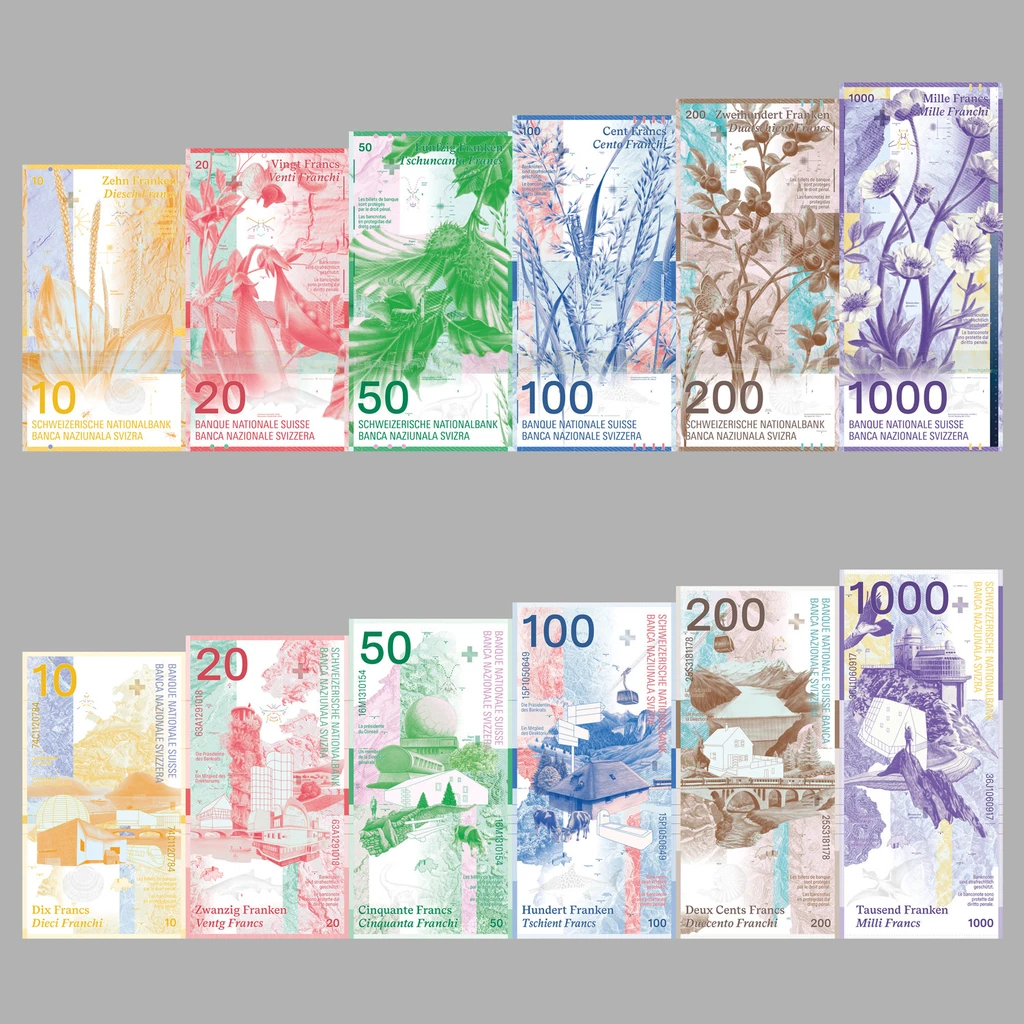
The Swiss National Bank has unveiled the winning concept for the next generation of Swiss banknotes, scheduled for implementation around 2030. At a time when many countries are accelerating toward digital payments, Switzerland continues to emphasize the enduring role of physical currency. This development reflects more than design, it highlights national priorities around stability, privacy, and resilience. In parallel, Swiss voters have recently supported the preservation of cash usage, reinforcing a distinct approach in an increasingly cashless global economy. For internationally minded investors and families, these developments underscore broader themes: the Swiss franc’s long-standing reputation, institutional continuity, and its role as a reference currency during periods of global uncertainty.
What is changing with the new Swiss banknotes in 2030?
The upcoming Swiss banknote series represents an evolution in both design and security features, while maintaining continuity with Switzerland’s identity and values. The winning concept reflects themes of innovation, culture, and national cohesion, while integrating advanced anti-counterfeiting technology.
Although the physical appearance will change, the underlying message remains consistent: trust in the currency and the system it represents. The Swiss National Bank’s careful, multi-year approach to redesign highlights a preference for stability over rapid change. For observers, this reinforces Switzerland’s broader financial philosophy, incremental evolution within a framework of long-term reliability.
Why does Switzerland continue to support cash?
In contrast to many economies moving toward digital-only systems, Switzerland has reaffirmed the importance of cash. A recent public vote demonstrated supportfor preserving physical currency as a legal and practical means of payment.
This approach reflects cultural preferences for privacy, financial autonomy, and system redundancy. Cash is viewed not only as a payment method but also as a safeguard in times of technological disruption or systemic stress. For global investors, this signals a broader commitment to optionality, maintaining multiple channels of financial access rather than relying exclusively on digital infrastructure.
What Makes the CHF 1,000 banknote so unique?
Switzerland remains one of the few countries that continues to issue a high-denomination banknote, and the CHF 1,000 banknote is a point of national pride.
While often discussed internationally, this denomination plays a practical role within Switzerland’s financial ecosystem, particularly in wealth preservation and efficient value transfer. Its continued existence reflects trust in institutions and a stable domestic environment.
Rather than being viewed as an anomaly, the CHF 1,000 note represents a broader philosophy: maintaining flexibility in how value is stored and transferred, especially in a world where financial systems are becoming increasingly complex.
Why is the Swiss Franc considered a safe haven currency?
Historically, the Swiss franc has been regarded as one of the strongest and most stable currencies globally, particularly during periods of geopolitical or economic uncertainty.
This perception is linked to Switzerland’s political stability, strong institutions, disciplined monetary policy, and economic resilience. During times of global distress, capital has often flowed toward the Swiss franc, reflecting its role as a perceived store of value.
While currency movements can fluctuate and past trends do not guarantee future performance, the Swiss franc continues to be widely referenced as a benchmark for stability in uncertain environments.
How do these developments reflect Switzerland’s financial philosophy?
The combination of new banknotes, support for cash, and the continued prominence of the Swiss franc illustrates a consistent national approach: balancing innovation with tradition.
Rather than fully embracing rapid digitalization, Switzerland appears to favor a diversified financial ecosystem that includes both modern and traditional elements. This may provide flexibility in adapting to future changes while maintaining continuity.
For internationally active families, this approach can be interpreted as part of a broader framework emphasizing long-term thinking, measured change, and institutional trust.
What could this mean for global investors and wealth planning?
For global investors, Switzerland’s stance on currency, cash, and financial infrastructure may be relevant when considering diversification across jurisdictions and currencies.
Holding assets in different currencies, including those perceived as stable, is one approach some investors evaluate as part of broader portfolio construction. However, currency exposure involves risks and should be assessed within the context of individual objectives and constraints.
Switzerland’s continued emphasis on stability and optionality may be one factor among many when considering long-term wealth planning strategies.
Frequently Asked Questions
When will the new Swiss banknotes be introduced?
The new series is expected to be implemented around 2030, following a phased rollout.
Why does Switzerland still prioritize cash?
Cash is viewed as supporting privacy, resilience, and financial independence alongside digital systems.
Is the CHF 1,000 banknote widely used?
It remains in circulation and reflects confidence in Switzerland’s financial system.
Is the Swiss franc always a safe haven?
It has historically been viewed as stable, but currency values can fluctuate and are not guaranteed.
Summary
What do Swiss banknotes signal about stability and trust?
The introduction of new Swiss banknotes, combined with public support for cash and the continued global relevance of the Swiss franc, reflects a broader commitment to stability, flexibility, and long-term thinking.
While financial systems evolve globally, Switzerland’s approach suggests a preference for maintaining trusted structures alongside innovation. For investors and internationally active families, these developments may serve as a reminder of the importance of diversification, resilience, and thoughtful planning in a changing world.
This article reflects the perspective of Alpen, a Swiss-based financial advisor and global wealth planner advising internationally active individuals and families on second residency planning, jurisdictional diversification, and cross-border structuring considerations in addition to traditional wealth management services.
Alpen Partners and Alpen Partners International are licensed by FINMA, the Swiss Financial Market Supervisory Authority, as a portfolio manager.
Alpen Partners is licensed throughout Canada as a portfolio manager.
Alpen Partners International is registered with the SEC in the United States as an investment advisor.
All investments involve certain risks. All investments carry the potential for financial loss, including the loss of the principal amount invested. Past performance is not an indicator of future results.
Market conditions and broader economic factors can significantly impact the value of investments. Investments in international markets are subject to additional risks, such as currency exchange fluctuations, political or economic instability, and variations in accounting practices. Alternative investments, including but not limited to hedge funds, private equity, and real estate, may be illiquid, speculative, and are not suitable for all investors.
The above information should be considered before making any investment decisions.
All posts and publications are for your information only and are not intended as an offer, promotion, or solicitation to buy or sell any financial instrument or perform any other financial transactions. All information and opinions expressed in posts and publications reflect our current views as of the date of the publication and may be liable to change without notice.
Author
Alpen Partners International
Your partner for asset management
Have any questions?
We are your partner to find the best private bank.
No matter the problem, Alpen will handcraft a solution for you. We know that there is no one-size-fits-all when striving for financial success. Our approach involves working with our clients to make a unique plan to meet their needs.




 Retirement Planning


