What happens when crypto moves from the edge of finance into traditional wealth management?
For years, cryptocurrencies appeared to occupy a financial world of their own. Traditional portfolios were held at banks and managed by investment professionals; digital assets were more likely to sit on exchanges or in private wallets.
That distinction is becoming less clear.
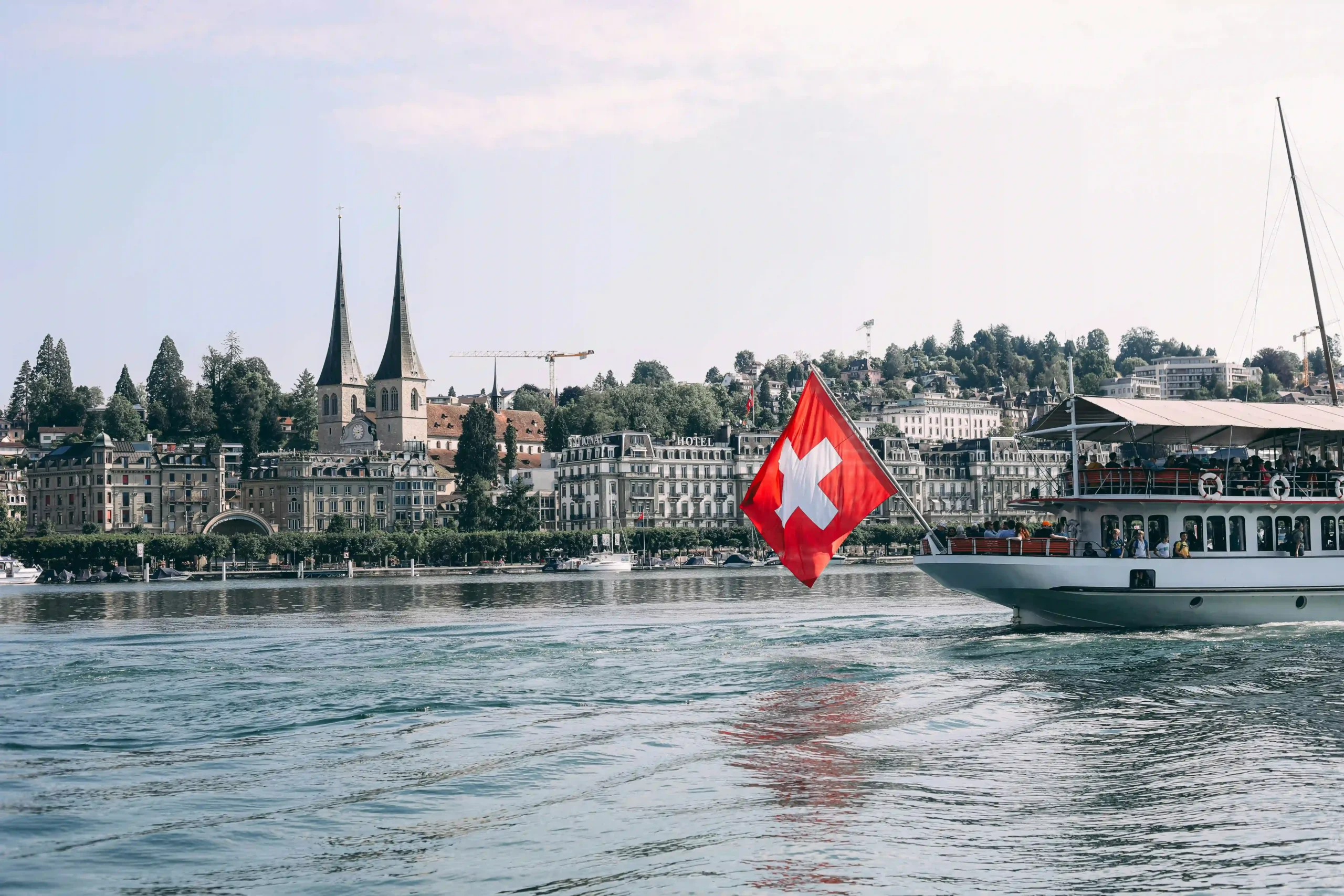
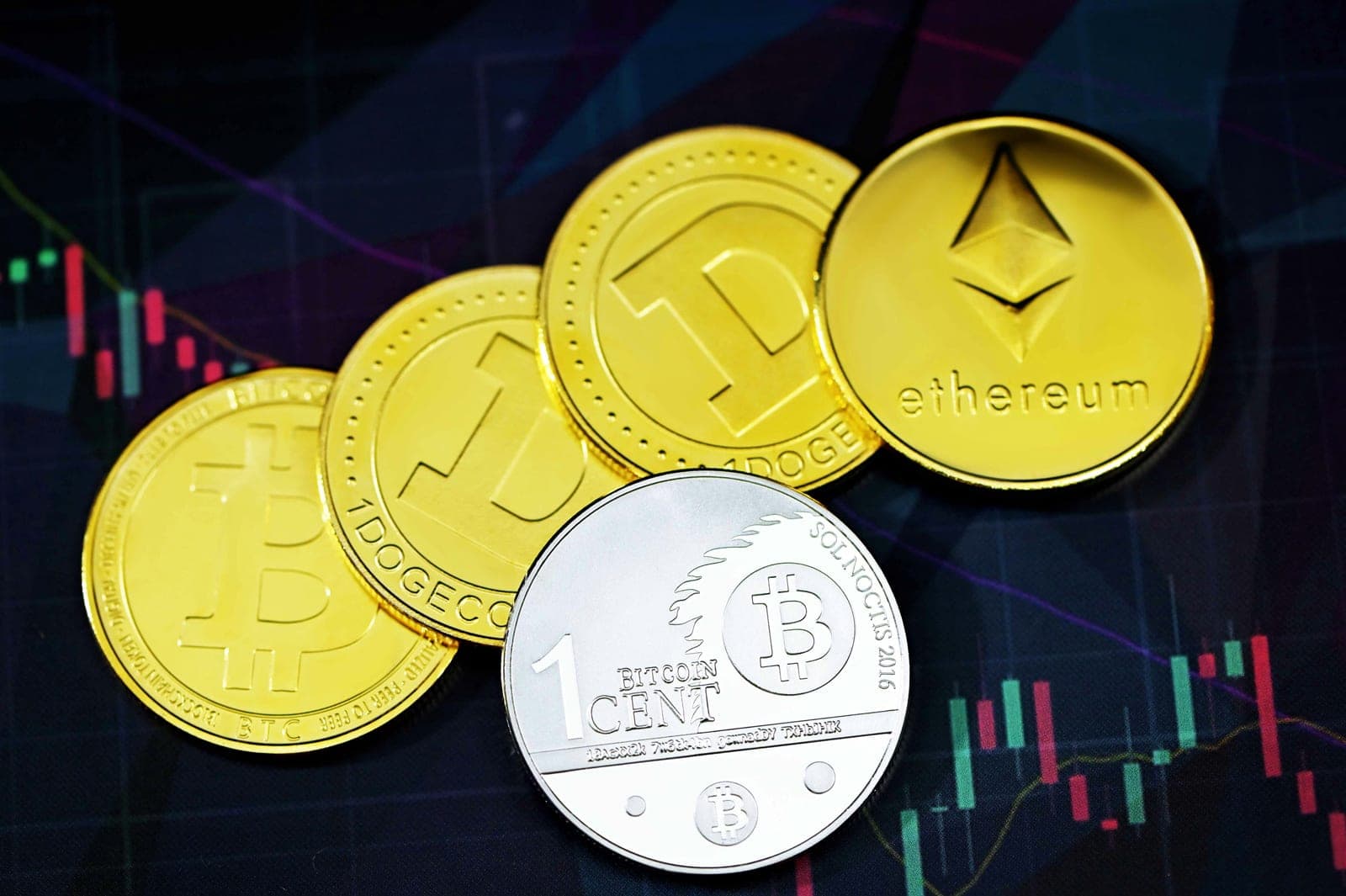
Bitcoin, Ether, tokenized assets, blockchain-based securities, and other digital investments are increasingly being considered by private banks, asset managers, family offices, and institutional investors. Switzerland has been developing its regulatory and financial infrastructure for that convergence for years.
Its appeal is not simply that Switzerland is “crypto-friendly.” More important is the combination of a developed regulatory framework, established financial institutions, specialized custody capabilities, and a wealth-management industry accustomed to incorporating new asset classes into broader portfolios.
For investors, the question is therefore changing from “Is crypto an investment?” to “How should digital assets fit within the rest of my wealth?”
Why has Switzerland become an important center for digital assets?
Switzerland recognized relatively early the potential for blockchain technology was likely to become part of financial services.
Rather than treating digital assets as an entirely separate financial system, Switzerland has generally followed a technology-neutral regulatory approach. Existing financial-market rules apply according to the economic purpose and risks of the activity, while legislation has been adapted where distributed-ledger technology created genuinely new requirements.
The country’s DLT legislation established a framework for blockchain-based securities and DLT trading facilities, among other developments.
This matters for investors because institutional participation generally requires more than enthusiasm for an asset class. It requires rules governing custody, trading, ownership, compliance, and investor protection.
That infrastructure has contributed to the development of a Swiss digital-asset conversation beyond experimentation.
What does Switzerland’s Crypto Valley add to the picture?
Much of Switzerland’s early blockchain development became associated with Zug and the surrounding region known internationally as Crypto Valley.
What began as a concentration of blockchain entrepreneurs has developed into a broader ecosystem encompassing technology companies, digital-asset specialists, banks, legal and tax professionals, investors, and financial infrastructure providers.
Zurich has simultaneously emerged as another important centeras traditional finance and digital assets converge.
That combination is particularly relevant from an asset-management perspective. Switzerland does not have a cryptocurrency sector developing entirely outside its established financial industry. Increasingly, the two worlds interact.
For private investors and families, that can make digital assets easier to consider within the same broader framework used for equities, bonds, private markets, currencies, and other investments.
Why does regulation matter so much for cryptocurrency investors?
Digital assets introduce risks that differ in important respects from traditional securities.
Questions surrounding custody, ownership, cybersecurity, counterparty exposure, liquidity, valuation, and operational resilience can be just as important as the investment thesis itself.
Switzerland’s regulatory framework has continued to evolve as those issues have become clearer.
The Swiss Financial Market Supervisory Authority FINMA’s 2026 guidance on the custody of crypto-based assets, for example, emphasizes appropriate safekeeping, prudentially supervised custodians, adequate technical infrastructure, and the ability to segregate client crypto assets in the event of a custodian’s bankruptcy.
That does not remove cryptocurrency risk.
It does illustrate something important about the Swiss approach: as digital assets become part of managed portfolios, they are increasingly being assessed against standards relevant to professional wealth management.
Is crypto becoming part of traditional portfolio management?
Increasingly, yes, but that does not mean it belongs in every portfolio.
The more interesting development is that digital assets are gradually being considered alongside established asset classes rather than exclusively as standalone speculative investments.
FINMA itself noted in its 2026 custody guidance that cryptocurrencies such as Bitcoin and Ether are increasingly being used in individual portfolio management and are therefore becoming part of client portfolios.
For an independent asset manager, this changes the discussion.
The relevant questions include how much exposure is appropriate, what role the investment is intended to serve, how it interacts with other holdings, where it should be custodied, how liquid it is, and whether the additional volatility and operational risks are consistent with the investor’s objectives.
Why is custody different when the asset is digital?
With conventional securities, investors are generally familiar with the roles of banks, custodians, exchanges, and asset managers.
Cryptocurrency can work differently.
Private keys, wallets, blockchain settlement, and specialized custody arrangements introduce operational risks that investors may not encounter with traditional investments. Losing access credentials or relying on an unsuitable provider can have consequences very different from those associated with a conventional brokerage account.
This is one reason regulated custody has become central to institutional digital-asset adoption.
For wealth managers, deciding whether to invest in a digital asset is therefore only one part of the analysis. Understanding how and where that asset is held can be equally important.
Can cryptocurrency contribute to portfolio diversification?
Potentially, but the argument requires nuance.
Digital assets have different characteristics from traditional equities, bonds, currencies, and commodities. That can make them relevant when evaluating broader portfolio diversification.
Yet diversification should not be confused with protection.
Cryptocurrencies can experience substantial price swings, correlations can change rapidly during periods of market stress, and individual digital assets can carry very different risks.
For some investors, a measured allocation may fit within a broader portfolio. For others, the volatility, complexity, or investment characteristics may make digital assets inappropriate.
The allocation should follow the investment objective and risk analysis—not enthusiasm for the technology.
Why might international investors look to Switzerland for crypto exposure?
For internationally active investors, Switzerland can offer more than access to cryptocurrency itself.
It combines digital-asset capabilities with traditional private banking, investment management, multi-currency portfolios, and international wealth planning.
That can be particularly relevant for investors who already own digital assets and are now considering how those holdings fit within a more established financial structure.
An entrepreneur whose wealth originated in crypto, for example, may eventually face familiar wealth-management questions: How much should remain concentrated in digital assets? How should liquidity be managed? Should part of the wealth be diversified into equities, bonds, private markets, real estate, or other currencies? How should custody and succession be organized?
At that point, crypto becomes part of a much larger financial conversation.
What role can an independent swiss asset manager play?
The role of an asset manager is not simply to provide access to another investment.
It is to assess how an investment may fit within the client’s overall financial circumstances.
Where digital assets are permitted and considered suitable within the applicable regulatory and custodial framework, they can be evaluated alongside traditional investments as part of portfolio construction.
That means considering risk tolerance, concentration, liquidity, time horizon, custody, currency exposure, and the client’s other assets.
It can also mean looking in the opposite direction.
Investors who have created substantial wealth through cryptocurrencies may need help diversifying away from digital assets and building a broader portfolio designed around long-term wealth preservation.
That is increasingly where traditional Swiss wealth management and the digital-asset economy meet.
Could tokenization become more important than cryptocurrency itself?
Possibly.
The longer-term significance of blockchain for wealth management may extend far beyond Bitcoin and other cryptocurrencies.
Tokenization can potentially change how conventional financial and real-world assets are issued, traded, settled, and held. Bonds, equities, funds, private-market investments, and other assets can potentially be represented through distributed-ledger technology.
Switzerland has created a regulated framework for DLT trading facilities, providing infrastructure for the trading, custody, clearing, and settlement of certain DLT securities.
For investors, this suggests that the distinction between “traditional assets” and “digital assets” may become progressively less useful.
The underlying investment may remain familiar. What changes is the technology through which ownership and transactions are recorded.
Frequently Asked Questions
Is cryptocurrency regulated in Switzerland?
Cryptocurrency activities can fall under various Swiss financial-market laws depending on their economic function and the business model involved. Switzerland generally applies existing financial regulation on a technology-neutral basis, supplemented by legislation addressing DLT-specific issues.
Can Swiss asset managers include cryptocurrency in managed portfolios?
Crypto-based assets may form part of individual portfolio management where permitted and appropriate. Asset managers must consider suitability, custody, applicable regulation, and the risks of the investment.
Does holding cryptocurrency in Switzerland make it less risky?
No. Switzerland’s regulatory and financial infrastructure does not eliminate cryptocurrency price volatility, liquidity risk, technology risk, custody risk, or the possibility of substantial investment losses.
Is Switzerland only relevant for Bitcoin and cryptocurrencies?
No. Switzerland’s digital-asset ecosystem also encompasses blockchain infrastructure, tokenized securities, regulated DLT trading facilities, custody, and other applications of distributed-ledger technology.
Summary
Switzerland’s importance to digital assets is not based on cryptocurrency enthusiasm alone.
Its more interesting contribution has been bringing elements of the digital-asset economy into a legal, regulatory, banking, custody, and investment-management environment that institutional and private investors can understand.
That process is still evolving.
Cryptocurrencies remain volatile and complex investments. Blockchain technology will continue to change. Regulation will develop further, and some digital assets and business models will inevitably disappear while others mature.
But one trend is becoming harder to ignore: digital assets and traditional wealth management are moving closer together.
For Switzerland, with its long history of managing international private wealth and its early engagement with blockchain and digital assets, that intersection has become an increasingly relevant part of the Swiss financial landscape.
For investors, the question is no longer simply whether crypto belongs in Switzerland.
It is whether, and how, it may fit within an appropriately diversified portfolio, based on the investor’s objectives and risk tolerance.
Source: https://www.finews.com/news/english-news/73102-calamos-ceo-john-koudounis-switzerland-europe-growth
About the Author
This article reflects the perspective of Alpen, a Swiss-based financial advisor and global wealth planner advising internationally active individuals and families on second residency planning, jurisdictional diversification, and cross-border structuring considerations in addition to traditional wealth management services.
Alpen Partners and Alpen Partners International are licensed by FINMA, the Swiss Financial Market Supervisory Authority, as a portfolio manager.
Alpen Partners is licensed throughout Canada as a portfolio manager.
Alpen Partners International is registered with the SEC in the United States as an investment advisor.
The firm provides globally diversified investment management, Swiss private banking coordination, multi-currency strategies, family office services, and cross-border wealth planning.
For US clients, Alpen Partners International is registered with the US Securities and Exchange Commission as an Investment Adviser.
All investments involve certain risks. All investments carry the potential for financial loss, including the loss of the principal amount invested. Past performance is not an indicator of future results.
Market conditions and broader economic factors can significantly impact the value of investments. Investments in international markets are subject to additional risks, such as currency exchange fluctuations, political or economic instability, and variations in accounting practices. Alternative investments, including but not limited to hedge funds, private equity, and real estate, may be illiquid, speculative, and are not suitable for all investors.
The above information should be considered before making any investment decisions.
All posts and publications are for your information only and are not intended as an offer, promotion, or solicitation to buy or sell any financial instrument or perform any other financial transactions. All information and opinions expressed in posts and publications reflect our current views as of the date of the publication and may be liable to change without notice.




 Cryptocurrencies